Your Cart is Empty
Mounts

May 01, 2026 4 min read
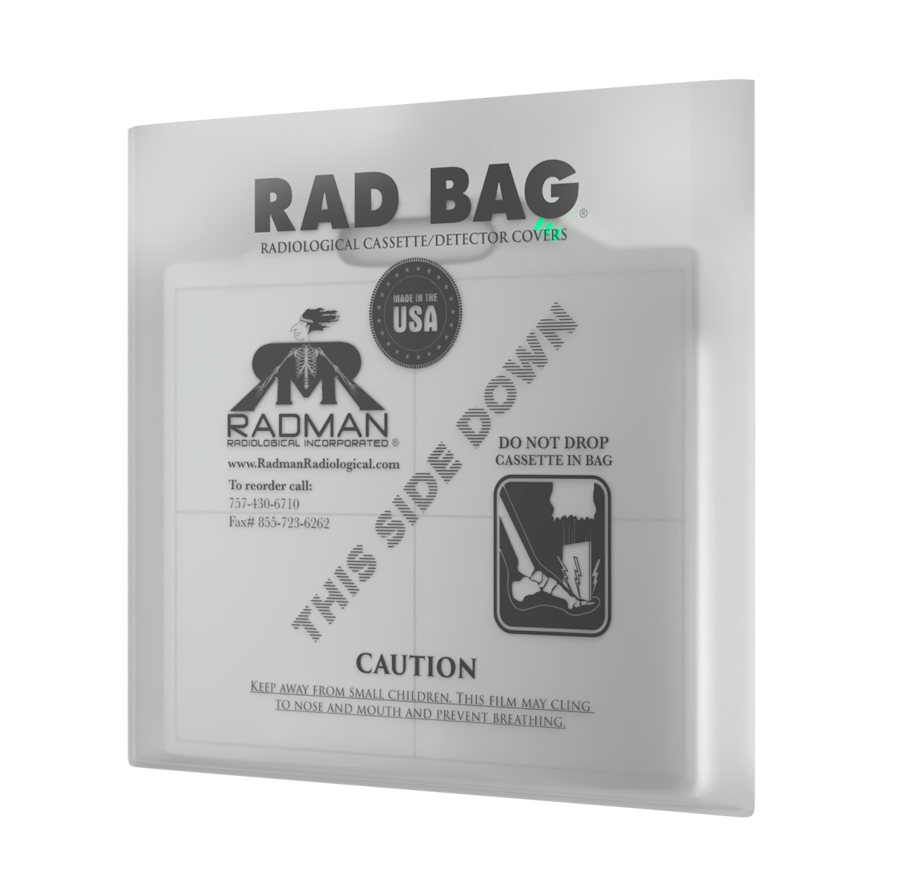
A digital detector is one of the most expensive mobile assets in a radiology department—often $60,000 or more. The only thing standing between that panel and a spill, a pathogen, or a drop onto an ICU floor is a polyethylene cover that costs less than a dollar.
Picking the right cover isn't just procurement. It's infection control, equipment protection, and the difference between a trauma tech who gets the image on the first try and one who's fighting a bunched-up bag at the worst possible moment.
At Radman Radiological, we've watched the wrong cover slow down a trauma bay and shorten the life of a brand-new DR panel. Here's what actually matters when you're choosing.
Cover thickness is measured in mils—thousandths of an inch. The right thickness depends on what the cover is being asked to do:
Choosing the right thickness for the job matters more than defaulting to the heaviest option. A 2-mil cover on a routine outpatient exam is overkill; a 1.6-mil cover in a trauma bay isn't enough. Match the bag to the room.
This is the part buyers rarely see in a spec sheet, and it's the part techs notice first. Friction on a cassette cover is a balancing act:
Radman's Regular RadBags are finished with a matte surface that splits the difference—low friction against skin and linens, enough tactile resistance that the tech keeps control of the plate. It's a small engineering detail that a radiology department feels on every single exam.
How a cover closes determines how much protection you actually have when fluids show up.
When a code is called, the last thing a tech should be doing is peeling stuck-together plastic bags apart one-handed.
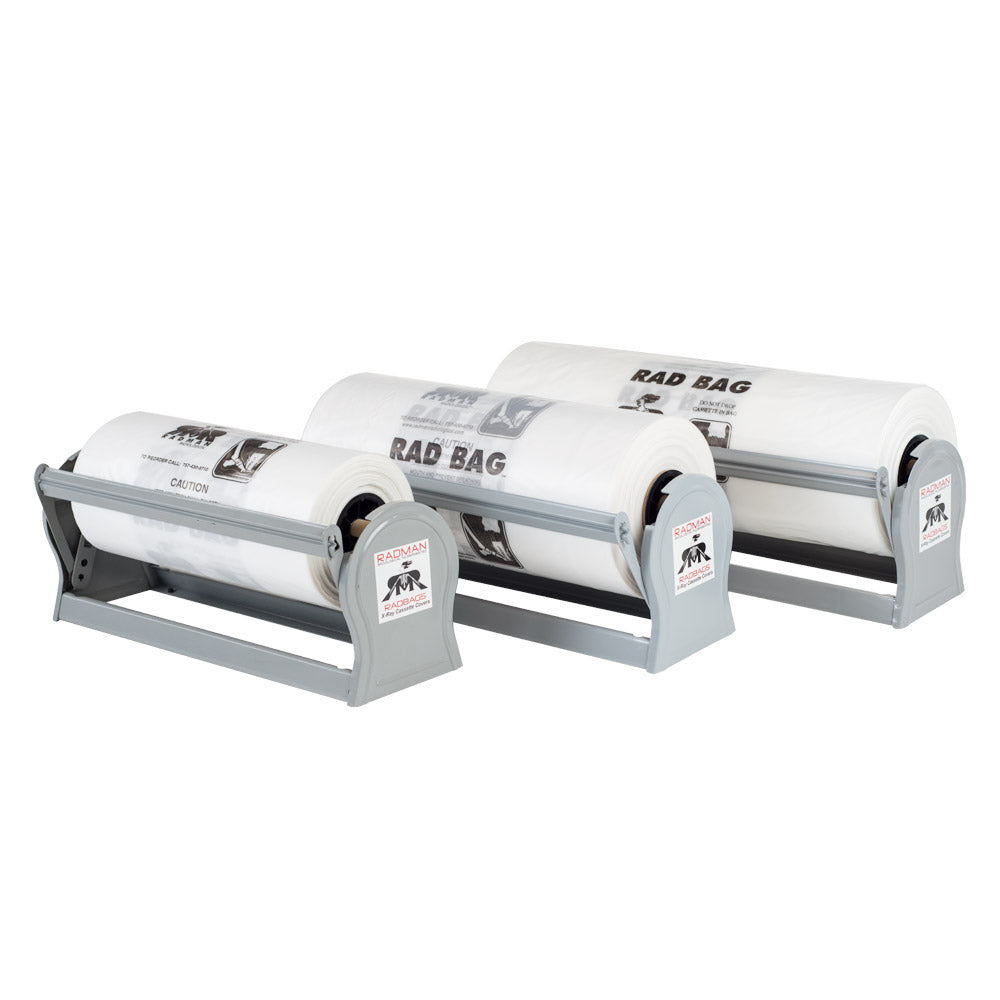
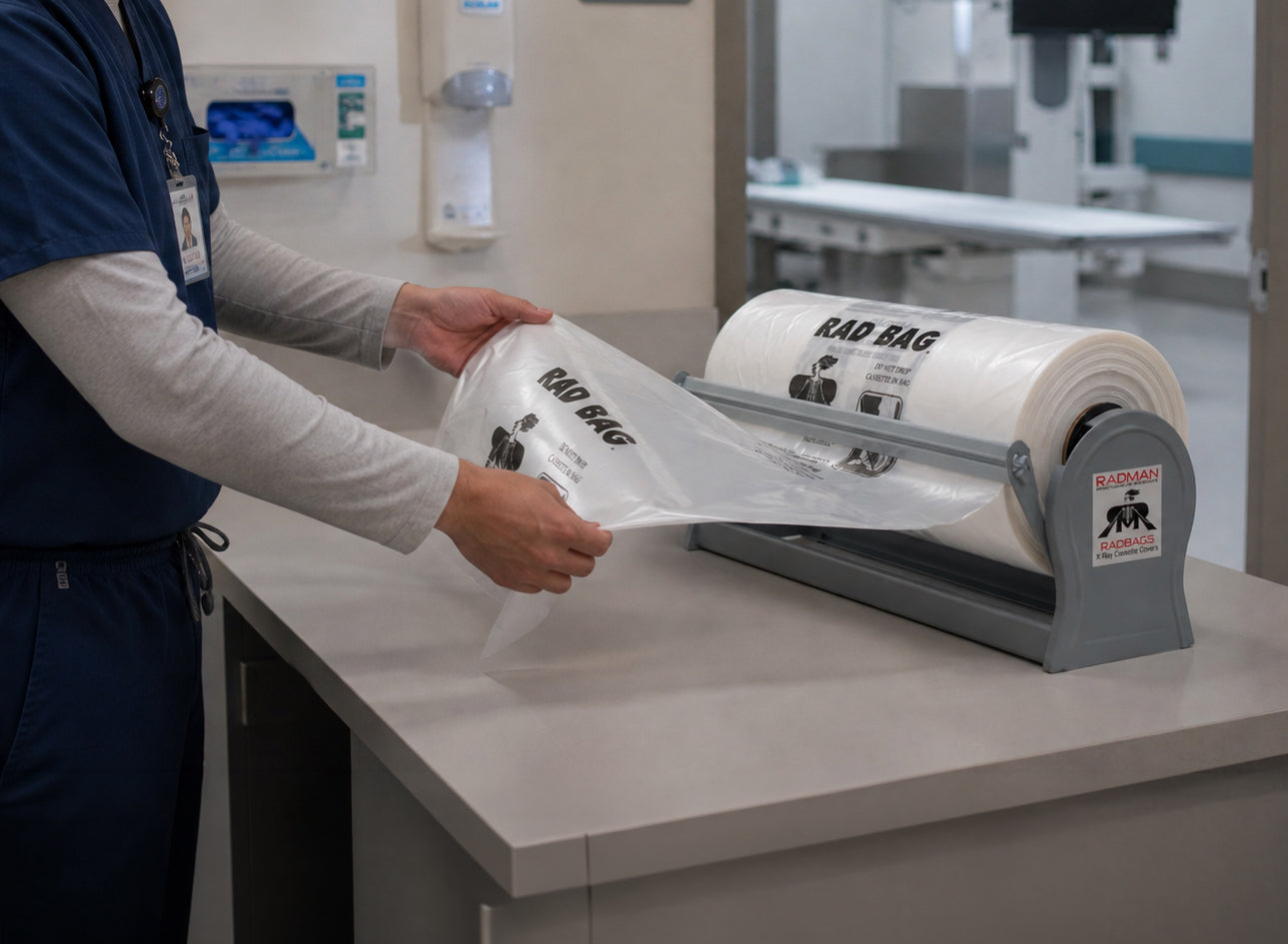
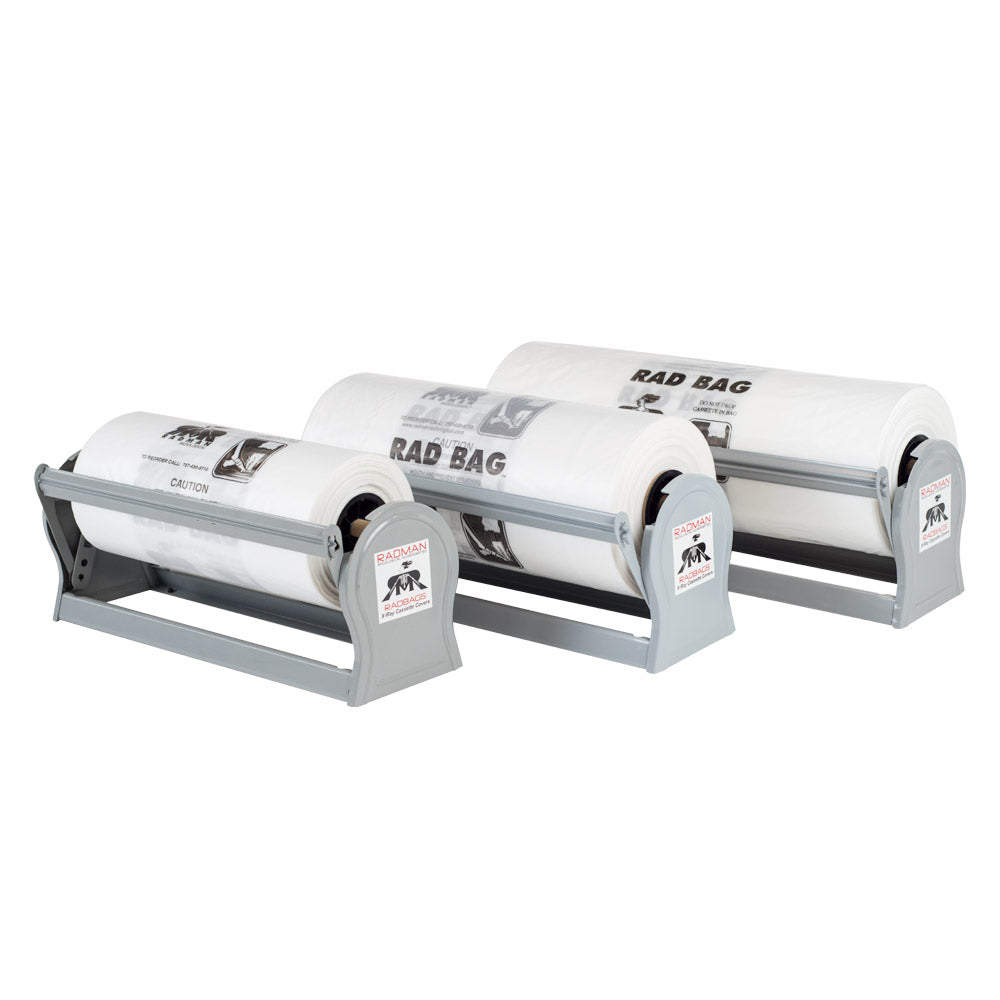
Radman's clump bags are manufactured with a low-static finish and packaged so they separate cleanly from the stack. The tech grabs one cover with one hand, loads the plate with the other, and moves. Individually packaged covers work fine for scheduled exams, but in a high-acuity setting—trauma, ICU portables, OR—clump bags save real seconds on every exam. Across a shift, that adds up.
| Product Type | Closure Style | Best For | Key Benefit |
|---|---|---|---|
| Clump Bags | Open / Fold | High-volume clinics, trauma | Low-static finish; easy single-hand grab |
| Ziplock Covers | Press-to-close | Trauma & ER | Fluid-tight seal against blood and saline |
| Custom Fit | Tailored snug | Advanced DR panels | Low profile; minimizes image artifacts |
| Regular RadBags | Fold-over | Routine portables | Balanced glide-and-grip finish |
It's easy to treat cassette covers as a line-item commodity. The actual cost of buying down on quality shows up in three places:
Whether you're stocking a trauma bay with ziplock covers or keeping an outpatient clinic running on clump bags, the job of the cover is the same: keep the detector in service so the tech can stay focused on the patient.
Radman carries sizes from 8x10 extremity through 14x17 and 17x17. If you're not sure which line fits your department's workflow, the full catalog is at RadmanRadiological.com.